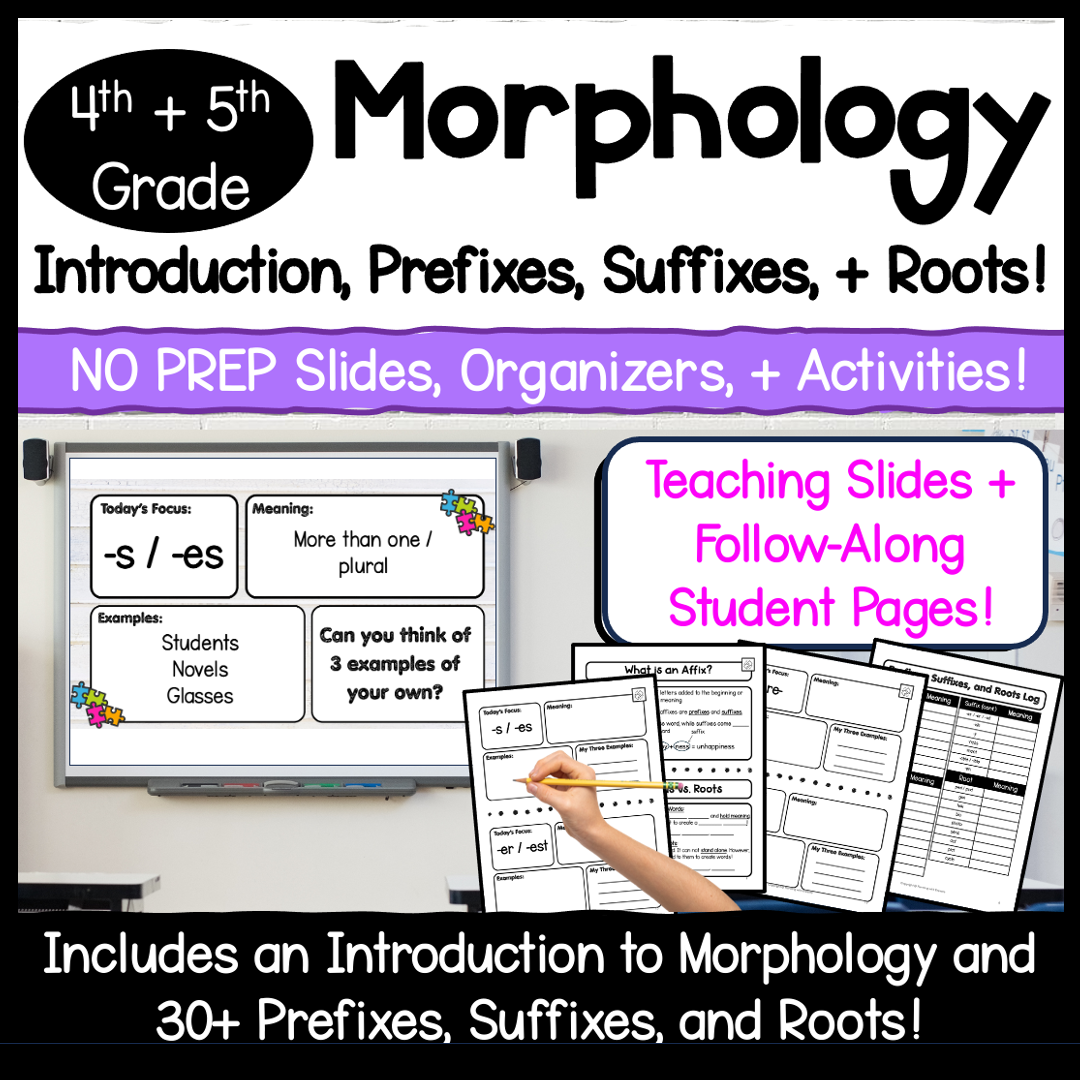
Teaching Morphology to 4th and 5th Graders
The idea of teaching morphology can be overwhelming. It can be complicated, but there are ways to simplify it for your students (and yourself)!
What is Morphology?
Morphology is the study of word structure. When teaching it to upper elementary students, it’s really about teaching them to determine the meanings of unknown words on their own. It’s a powerful tool that they can use to figure out word meanings!
What Should we Focus On?
To keep morphology simple and approachable for upper elementary students, I focus on these main ideas:
Morphology is learning how words are like puzzle pieces, and we can put the pieces together to help understand their meanings
Prefixes: What is a prefix? What are the ones we most commonly see, and what do they mean?
Suffixes: What is a suffix? What are the most common ones that we see in words and what do they mean?
Roots: What are roots, and how can knowing roots help us to determine the meanings of words?
The Puzzle Piece Analogy
I like to present morphology like a series of puzzle pieces. In a given word, you may have a prefix, a root, and a suffix (or any combination of the three). If you can identify each part (or piece) and its meaning, you put the pieces together to determine the meaning of the word!
Basic Structure for Students:
Prefix + Root + Suffix = meaning*
*Some words will have a prefix and a root, others will have a root and a suffix, others will have different combinations! They key is using the pieces that we KNOW to determine meaning
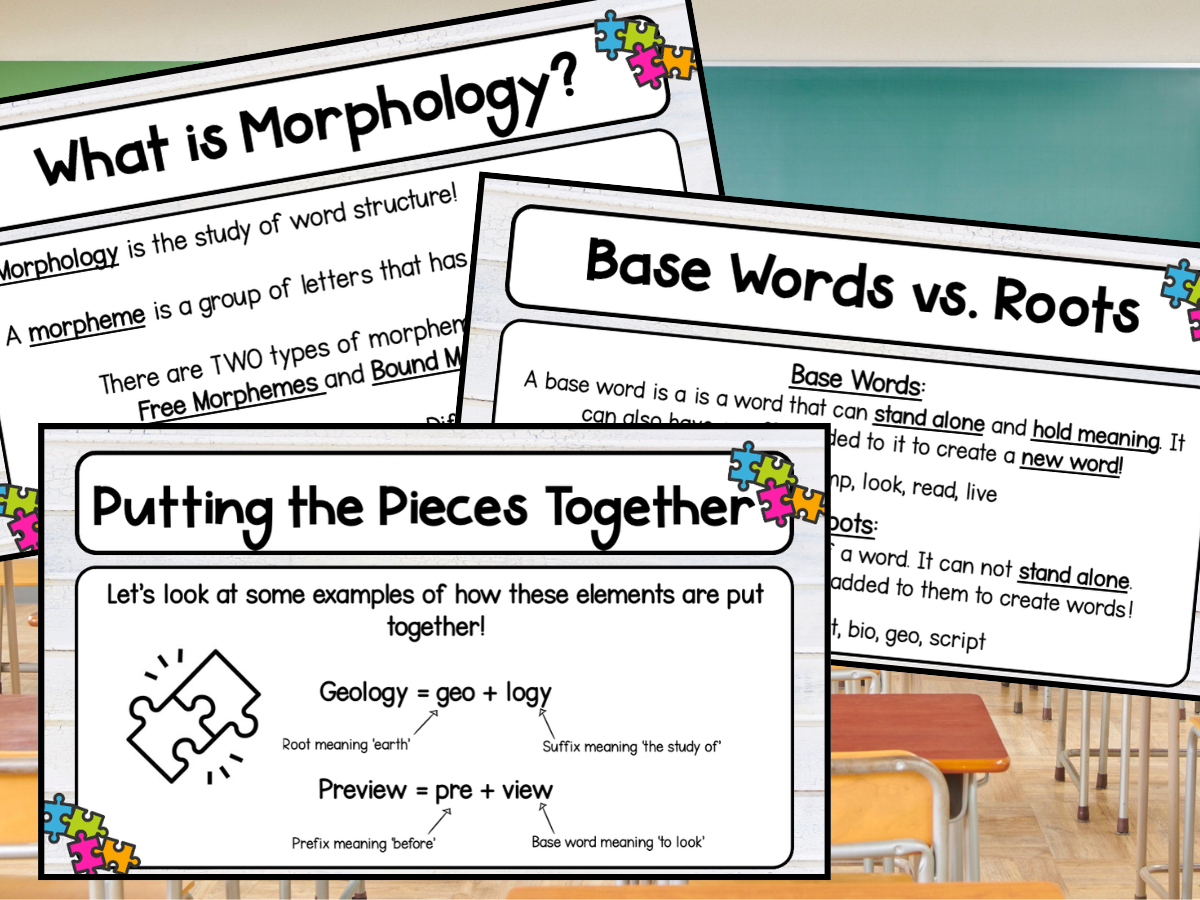
Breaking it down to simple terms helps students to feel less overwhelmed as you introduce morphology!
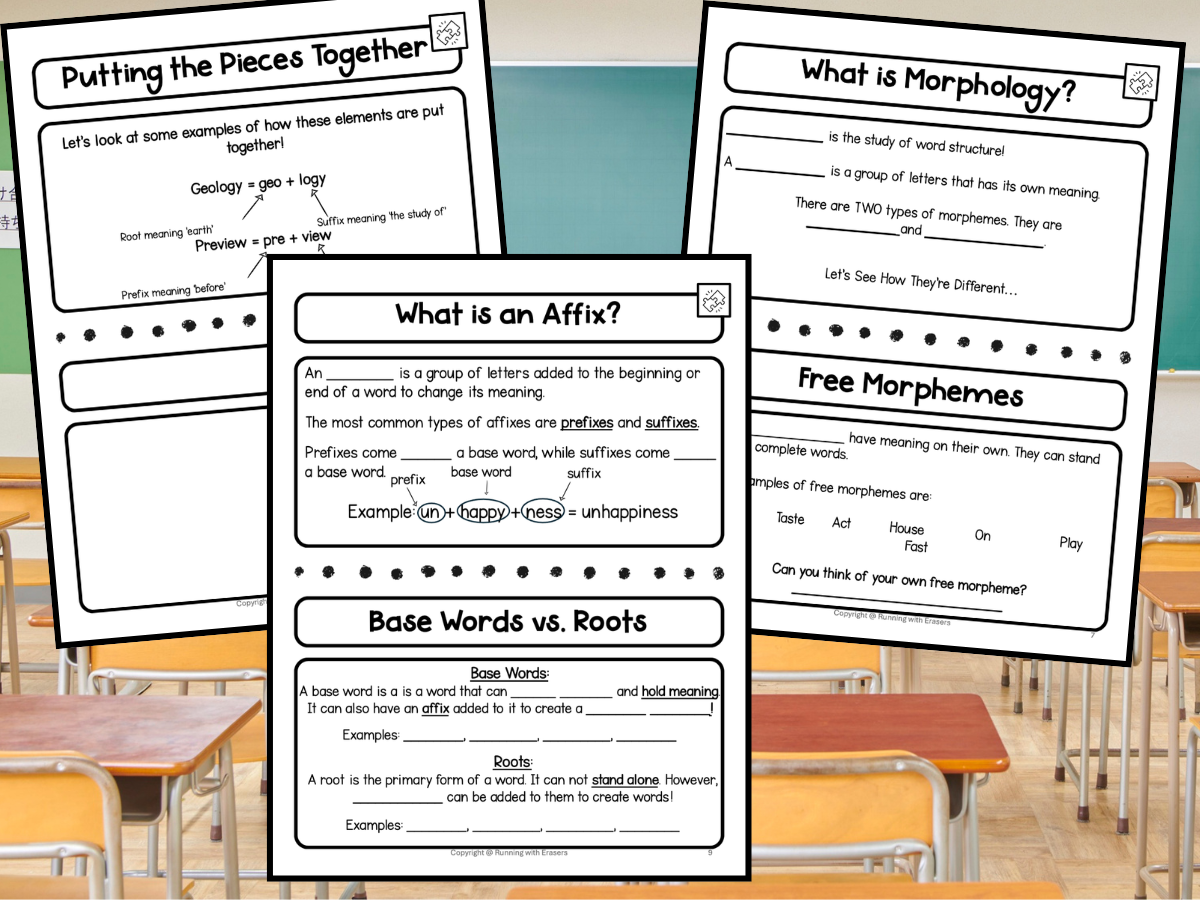
Giving students follow-along notes that they can refer back to is key!
How Should Morphology Be Paced?
Morphology can be Paced many different ways, and it especially depends on the amount of time you have to devote to it. While you could just do one large morphology unit, I think it works better as something that the students are exposed to all year long. Therefore, I think it best to focus on a handful of prefixes, suffixes, and roots per week. They can be introduced at the beginning of the week, practiced throughout the week, then assessed.
Practice, repetition, and having resources they can reference IN REAL TIME when they come across a word they don’t know!
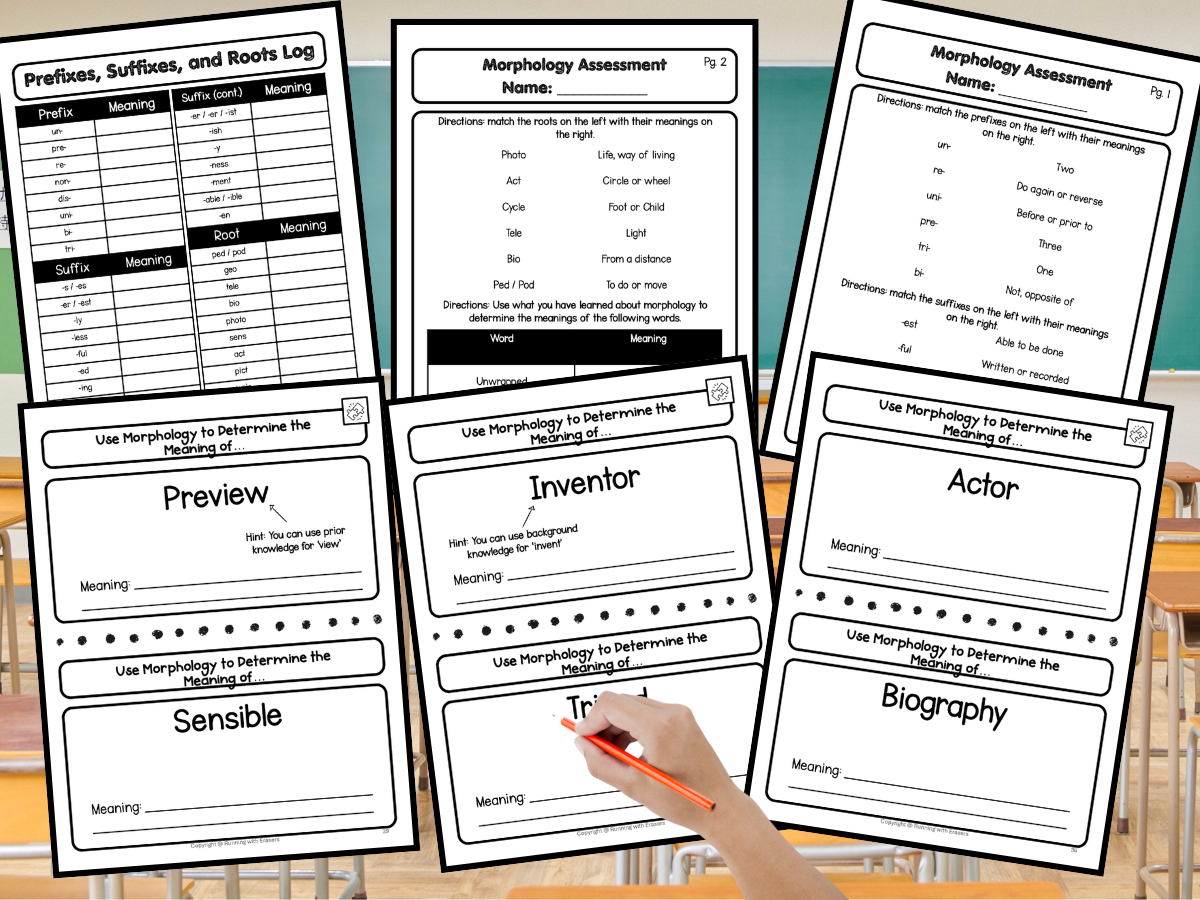
Lots of practice, repetition, and resources they can refer back to as they encounter new words! An assessment always helps you to know where they are in their understanding also!
Morphology can be intimidating, but it can also be a POWERFUL TOOL for students.
Need some NO PREP slides and follow-along student pages to get you started? I’ve got you covered HERE!